
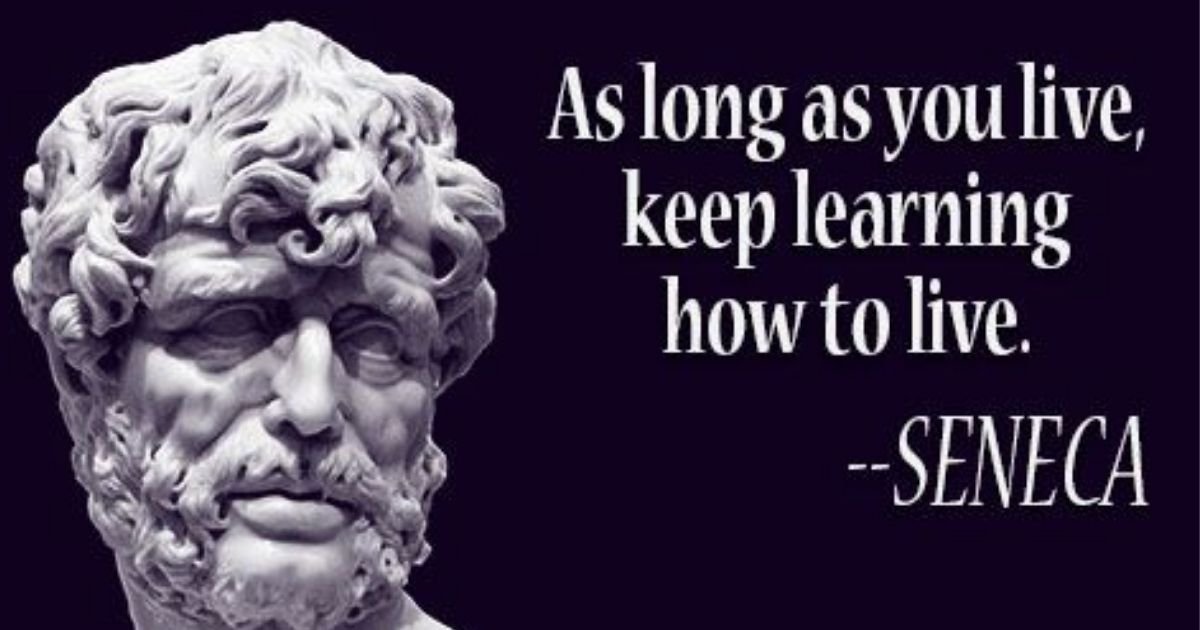
Seneca, a renowned playwright and statesman, offers timeless wisdom through his quotes that can transform our chaotic lives. In this article, we’ll explore Seneca’s quotes that distill profound insights on tranquility and concentration, helping you navigate today’s fast-paced world with ease.
Prepare to incorporate ancient wisdom into every word of your daily routine.This article will showcase some of his best quotes, offering you guidance on how to incorporate serene reflection into your daily life.
Seneca’s Quotes to Live By
Seneca’s wisdom transcends time, offering insights that can illuminate our modern lives. One particularly powerful quote, “We suffer more often in imagination than in reality,” serves as a reminder of how our fears and anxieties can distort our perception of the world.
By challenging ourselves to differentiate between genuine threats and imagined woes, we can cultivate a more resilient mindset. Embracing this philosophy can lead us to focus on the present, allowing us to savor life rather than merely endure it.
Powerful Life Lessons from Seneca
The teachings of Seneca remind us that true strength comes from mastering our thoughts and emotions rather than trying to control the outside world. He believed that life’s difficulties are not obstacles but opportunities to build resilience, patience, and wisdom.
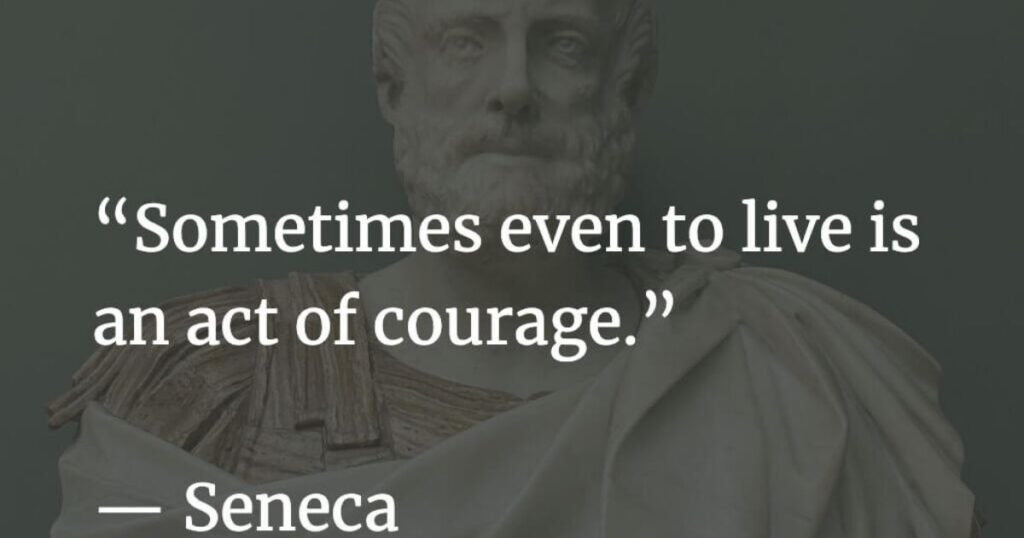
✧ Sometimes even to live is an act of courage.
✧ Luck is what happens when preparation meets opportunity.
✧ All cruelty springs from weakness.
✧ He who is brave is free.
✧ Difficulties strengthen the mind, as labor does the body.
✧ Begin at once to live, and count each separate day as a separate life.
✧ It is not what you endure that matters, but how you endure it.
✧ Fire tests gold, suffering tests brave men.
✧ No man was ever wise by chance.
✧ It’s not because things are difficult that we dare not venture. It’s because we dare not venture that they are difficult.
✧ As long as you live, keep learning how to live.
Timeless Wisdom from Seneca
Seneca’s wisdom continues to resonate across centuries because it speaks directly to the struggles of everyday life. He taught that peace of mind comes from simplicity, self-discipline, and a clear understanding of what truly matters.
✧ The greatest blessings of mankind are within us and within our reach.
✧ We learn not in the school, but in life.
✧ The best ideas are common property.
✧ The more a mind takes in the more it expands.
✧ What really ruins our character is the fact that none of us looks back over his life.
✧ No man’s good by accident. Virtue has to be learnt.
✧ Philosophy has no business to supply vice with excuses.
✧ There is no genius without a touch of madness.
✧ Glory’s an empty, changeable thing, as fickle as the weather.
Seneca’s Words of Clarity and Calm

Seneca’s reflections offer a gentle yet powerful reminder that clarity begins within the mind. He believed that when we quiet unnecessary worries and focus on what we can control, life becomes far less overwhelming. His words encourage patience in difficult moments, simplicity in daily living, and courage in the face of uncertainty.
✧ The mind that is anxious about future events is miserable.
✧ He suffers more than necessary, who suffers before it is necessary.
✧ We are more often frightened than hurt; we suffer more often in imagination than in reality.
✧ Nothing, to my way of thinking, is a better proof of a well ordered mind than a man’s ability to stop just where he is and pass some time in his own company.
✧ Silence is a lesson learned through life’s many sufferings.
✧ The man who has anticipated the coming of troubles takes away their power when they arrive.
✧ To bear trials with a calm mind robs misfortune of its strength and burden.
✧ Preserve a sense of proportion in your attitude to everything that pleases you.
Quotes That Teach the Art of Simple Living
Seneca’s words beautifully capture the essence of simple living by reminding us that true richness comes from contentment, not excess. He teaches that when we reduce our endless wants and focus on the present moment, life naturally becomes more peaceful and meaningful.
✧ You ask what is the proper limit to a person’s wealth? First, having what is essential, and second, having what is enough.
✧ If what you have seems insufficient to you, then though you possess the world, you will yet be miserable.
✧ It is not the man who has too little, but the man who craves more, that is poor.
✧ Wealth is the slave of a wise man. The master of a fool.
✧ Until we have begun to go without them, we fail to realize how unnecessary many things are.
✧ Poverty’s no evil to anyone unless he kicks against it.
✧ It is better to be despised for simplicity than to suffer agonies from everlasting pretense.
✧ The shortest route to wealth is the contempt of wealth.
Seneca’s Guide to a Meaningful Life
Seneca’s philosophy offers a practical roadmap for living with purpose and depth. He believed that a meaningful life is built not on wealth or status, but on wisdom, self-discipline, and the thoughtful use of time. By focusing on what we can control and accepting what we cannot, we free ourselves from unnecessary stress and distraction.
✧ What progress, you ask, have I made? I have begun to be a friend to myself.
✧ Happy is the man who can make others better.
✧ Let us say what we feel, and feel what we say; let speech harmonize with life.
✧ Wherever there is a human being, there is an opportunity for kindness.
✧ If a man knows not to which port he sails, no wind is favorable.
✧ But life is very short and anxious for those who forget the past, neglect the present, and fear the future.
✧ While we are postponing, life speeds by.
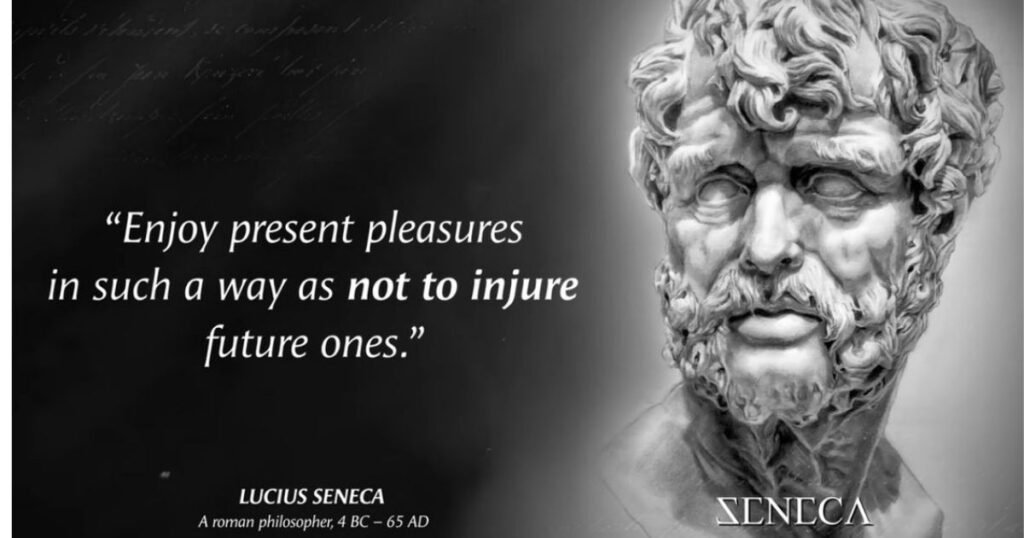
✧ Enjoy present pleasures in such a way as not to injure future ones.
✧ Man’s ideal state is realized when he lives in accordance with his own nature.
Seneca on Time and Life
Seneca viewed time as our most valuable and easily wasted resource. He warned that while people carefully guard their money and possessions, they often spend their time carelessly on distractions and trivial worries. According to Seneca, a wise life begins when we become conscious of how we use our days and choose to invest our time in meaningful actions, learning, and personal growth.
✧ Life, it is thanks to death that you are precious in my eyes.
✧ Every new beginning comes from some other beginning’s end.
✧ It takes the whole of life to learn how to live, and – what will perhaps make you wonder more – it takes the whole of life to learn how to die.
✧ Just as with storytelling, so with life: it’s important how well it is done, not how long.
✧ As is a tale, so is life: not how long it is, but how good it is, is what matters.
✧ Life is like a play: it’s not the length, but the excellence of the acting that matters.
✧ Putting things off is the biggest waste of life: it snatches away each day as it comes, and denies us the present by promising the future.
✧ Men do not care how nobly they live, but only for how long.
✧ But life is very short and anxious for those who forget the past, neglect the present, and fear the future.
✧ Whatever can happen at any time can happen today.
✧ What are you looking at? To what goal are you straining? The whole future lies in uncertainty: live immediately.
✧ While we are postponing, life speeds by.
✧ Nothing, Lucilius, is ours, except time.
Seneca on Travel, Direction, and Self

Seneca often reminded us that changing places does not guarantee inner peace; without self-awareness, we simply carry our restlessness wherever we go. He believed that true direction in life begins within, not on the road. Travel may refresh the body and broaden the mind, but only honest self-reflection can bring lasting clarity and calm.
✧ To be everywhere is to be nowhere.
✧ When a person spends all his time in foreign travel, he ends by having many acquaintances, but no friends.
✧ As it is, instead of travelling you are rambling and drifting.
✧ Where you arrive does not matter so much as what sort of person you are when you arrive there.
✧ Whatever your destination you will be followed by your failings.
✧ All this hurrying from place to place won’t bring you any relief.
✧ If you really want to escape the things that harass you, what you’re needing is not to be in a different place but to be a different person.
✧ I am not born for one corner; the whole world is my native land.
Seneca on Friendship and Human Nature
Seneca believed that genuine friendship is rooted in trust, virtue, and mutual growth rather than convenience or gain. He taught that we should choose friends carefully, but once chosen, we should trust them wholeheartedly and treat them with honesty and loyalty.
In his view of human nature, people are capable of both weakness and wisdom, which is why compassion and patience are essential in our relationships
✧ There is no enjoying the possession of anything valuable unless one has someone to share it with.
✧ But when you are looking on anyone as a friend when you do not trust him as you trust yourself, you are making a grave mistake.
✧ Love sometimes injures. Friendship always benefits.
✧ Withdraw into yourself, as far as you can. Associate with those who will make a better man of you.
✧ Envy of other people shows how they are unhappy.
✧ A man is as unhappy as he has convinced himself he is.
✧ Wherever there is a human being, there is an opportunity for crisis.
Seneca on Discipline, Anger, and Self-Control
Seneca taught that true strength lies in mastering our impulses rather than being ruled by them. He warned that anger, when left unchecked, clouds judgment and leads to actions we later regret. Through discipline and mindful self-control, he believed we can pause between emotion and reaction, choosing responses that reflect wisdom instead of impulse.
✧ Drunkenness is nothing but voluntary madness.
✧ People who know no self-restraint lead stormy and disordered lives.
✧ Anger, if not restrained, is frequently more hurtful to us than the injury that provokes it.
✧ The cause of anger is the belief that we are injured.
✧ He who indulges in empty fears earns himself real fears.
✧ No man can be sane who searches for what will injure him in place of what is best.
✧ To expect punishment is to suffer it and to earn it is to expect it.
Seneca on Hardship, Fortune, and Strength

Seneca believed that life’s challenges are not punishments but opportunities to build resilience and wisdom. He taught that fortune—whether good or bad—is often beyond our control, but our response to it defines our strength. Hardship tests character, sharpens the mind, and reveals what we truly value.
✧ There is no easy way from the earth to the stars.
✧ To be always fortunate… is to be ignorant of one half of nature.
✧ I judge you unfortunate because you have never lived through misfortune.
✧ Brave men rejoice in adversity, just as brave soldiers triumph in war.
✧ No man is crushed by misfortune unless he has first been deceived by prosperity.
✧ No man is more unhappy than he who never faces adversity.
✧ The growth of things is a tardy process and their undoing is a rapid matter.
Seneca on Books, Knowledge, and Philosophy

Seneca saw books and philosophy as essential guides for living wisely and understanding the world. He believed that knowledge is most valuable when it shapes our character and informs our actions, rather than simply filling the mind. Philosophy, in his view, teaches us how to face life’s uncertainties with calm, reflect on our choices.
✧ Leisure without books is death, and burial of a man alive.
✧ It does not matter how many books you have, but how good the books are which you have.
✧ For wisdom does not lie in books.
✧ To win true freedom, you must be a slave to philosophy.
✧ I never spend a day in idleness… I appropriate even a part of the night for study.
✧ I have withdrawn not only from men, but from affairs… I am working for later generations.
Seneca on Faith, Society, and Reality
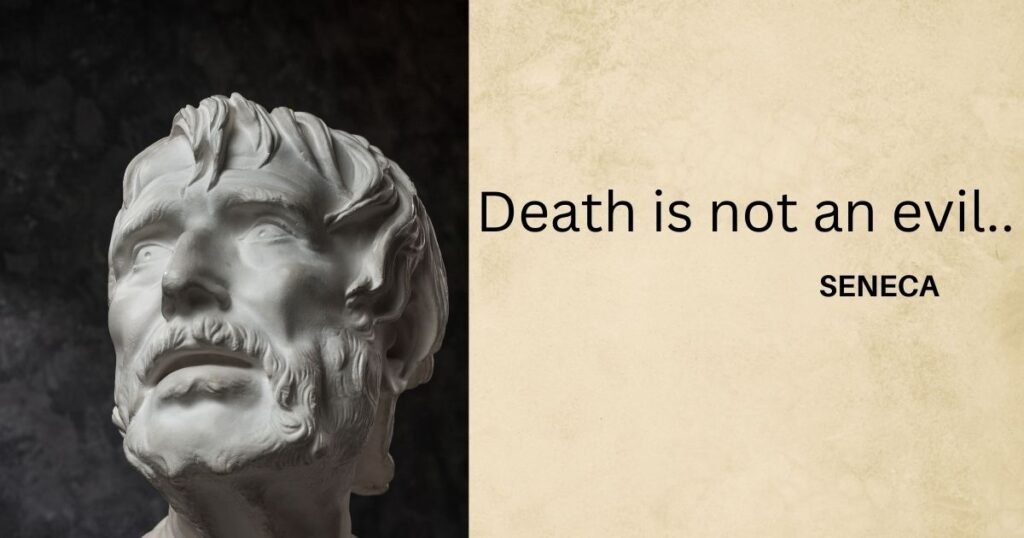
Seneca encouraged a thoughtful approach to faith and belief, urging individuals to focus on reason, virtue, and the natural order rather than blind superstition. He emphasized that society often distracts us with trivial pursuits, but true wisdom comes from understanding reality as it is and living in harmony with it.
✧ Religion is regarded by the common people as true, by the wise as false, and by rulers as useful.
✧ The sun also shines on the wicked.
✧ Injustice never rules forever.
✧ He who spares the wicked injures the good.
✧ Superstition is an idiotic heresy.
✧ Death is not an evil.
Seneca and Socrates both taught that discipline is the foundation of a strong life. Socrates focused on self-examination and believed that wisdom begins when we question ourselves. Seneca expanded this idea by teaching that we must control our emotions and desires to live peacefully. For both thinkers, strength was not about the body alone, but about mastering the mind.
Both philosophers agreed that true freedom comes from inner control. When we discipline our thoughts and actions, we become stronger than any external challenge. Their quotes continue to inspire people to live wisely, act justly, and build strength from within.